

Floating Hull Cleaning Station: Anahid at the 2026 Boat Show
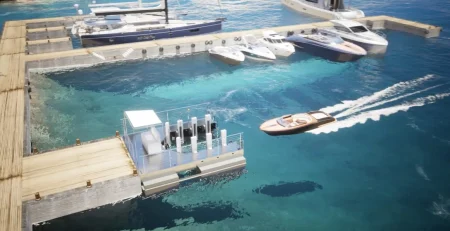
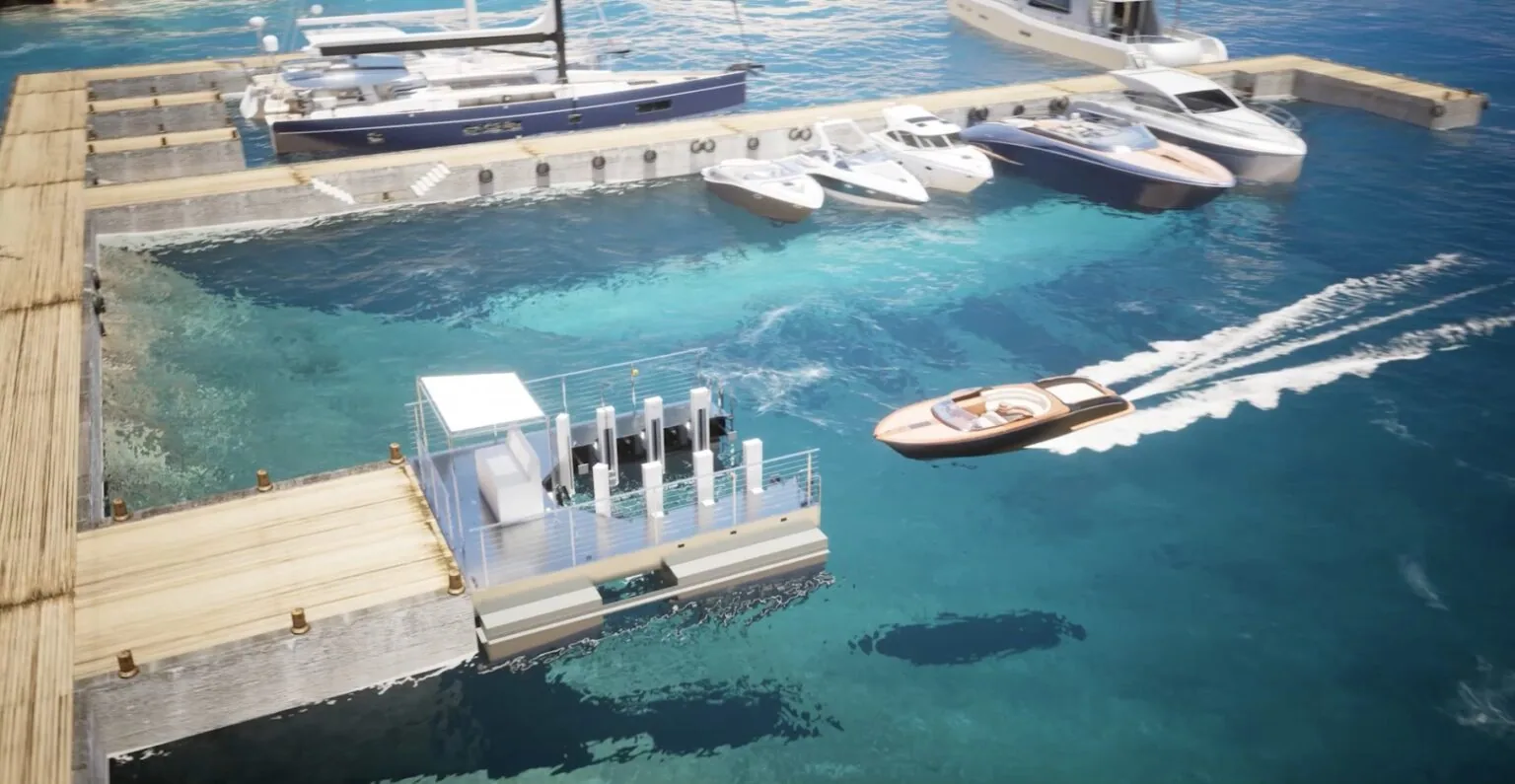
At the Venice Boat Show 2026, Geico presents Anahid, a floating platform that combines AI, robotics, and UVC LED technology to clean and sterilise hulls without the need to haul vessels out of the water. Ten years ago, underwater maintenance meant cranes, dry docks, and days of downtime in shipyards. Today, at the Venice Boat Show 2026, a floating hull-cleaning station is showcased as a working prototype: a technological building block that challenges established procedures and downtime cycles.
It is called Anahid. The platform combines artificial intelligence, robotics, and UVC LED sources to perform cleaning and sterilisation cycles on submerged surfaces without taking boats out of the water. The prototype is visible in the Mare Laguna area of the exhibition, presented by Quinn, and marks Geico’s entry into the nautical and offshore market with an approach derived from industrial automation.
Underwater maintenance will never be the same
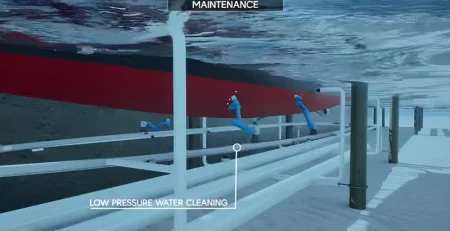
Anahid operates in layers: it maps, evaluates, and intervenes. High-definition cameras scan the hull, vision algorithms identify the level and type of biofouling, and robotic actuators perform targeted interventions while UVC LED sources treat the most critical areas. It is a continuous process, not a single intervention: monitoring generates coverage maps and removal percentages that feed diagnostic reports for preventive maintenance.
The technical description may sound complex, but the practical advantage is simple: fewer lift operations, less downtime, fewer invasive chemical treatments. The system provides operational data that allows maintenance to be planned more precisely, reducing costs and interruptions to nautical operations.
From automotive to the lagoon: why Geico matters
It is no coincidence that Geico approaches the nautical sector with tools originally developed in the automotive industry. Based in Cinisello Balsamo and with over sixty years of experience in designing automated systems, the company draws on expertise in process control, surface treatment, and industrial automation. That know-how has been adapted to operate in an environment with very different constraints compared to a paint production line.
The project is developed in partnership with Greensailor within the Clarum SEAS Project — Save Energy, Anchor Sustainability — which combines automation with eco-friendly antifouling coatings. The coatings used are “foul release” types, free from solvents, copper, and biocides, and diluted only with drinking water: technical choices that guide the entire system toward minimising its impact on the fragile lagoon ecosystem.
The first experimental phase was carried out with logistical support from the shipyard of the main transport company in the Venice Lagoon. Between the 2025 concept and today’s exhibited prototype lies the concrete transformation of an idea into a machine capable of operating in open water.
Sustainability and market: the numbers that cannot be ignored
Two figures help explain industrial interest: Italy accounts for 60% of global superyacht orders and 90% of production is destined for export. At the same time, the specialty coatings market was worth over 200 billion dollars in 2023, with strong projected growth toward 2032. These figures explain why a company with strong industrial and financial capacity is entering this sector.
Geico employs 140 people at its Cinisello Balsamo headquarters and recorded 500 million euros in automotive orders in 2023. This technological and industrial capital is now being redirected toward engineering, repeatability, and process control in the marine environment, with the goal of reducing emissions and the impact of traditional treatments.
The combination of UVC LED systems and “foul release” coatings aims to reduce biofouling while limiting the use of toxic substances. The principle is prevention and continuous control: cleaner hulls mean lower fuel consumption and reduced operational emissions for vessels.
Geico’s management, led by Daryush Arabnia, defines the prototype as an element of industrial diversification: technology developed in the automotive sector applied to concrete challenges in the nautical world — where sustainability, operational efficiency, and environmental protection are the guiding criteria.
On the operational side, regulatory and technical aspects remain open: certification parameters, safety protocols for offshore interventions, and scalability from a single station to distributed networks in ports and lagoons. These phases will require repeated testing, technical validation, and standardisation before the prototype can become a commercial service.
At the Venice Boat Show, Anahid is more than a test bench: it is the beginning of a path that intersects industrial policy, environmental protection, and market demand. Less impactful materials, automated processes, and continuous control are the three pillars of the challenge.
What happens in the coming months will depend on lagoon test campaigns, shipowner responses, and early pilot contracts that will define operational timelines and conditions. The project roadmap includes extended trials, technical validation, and certification processes as mandatory steps toward commercial scalability.
At the end of the show, one practical question remains: can underwater maintenance be delivered as a local service while maintaining safety, efficiency, and environmental protection standards suitable for the yacht and professional boating market? The answer will come from upcoming test campaigns and pilot contracts that will define real operating conditions.
Original article: Nautica Report — Floating hull cleaning station Anahid at the 2026 Boat Show. Content reproduced with permission.